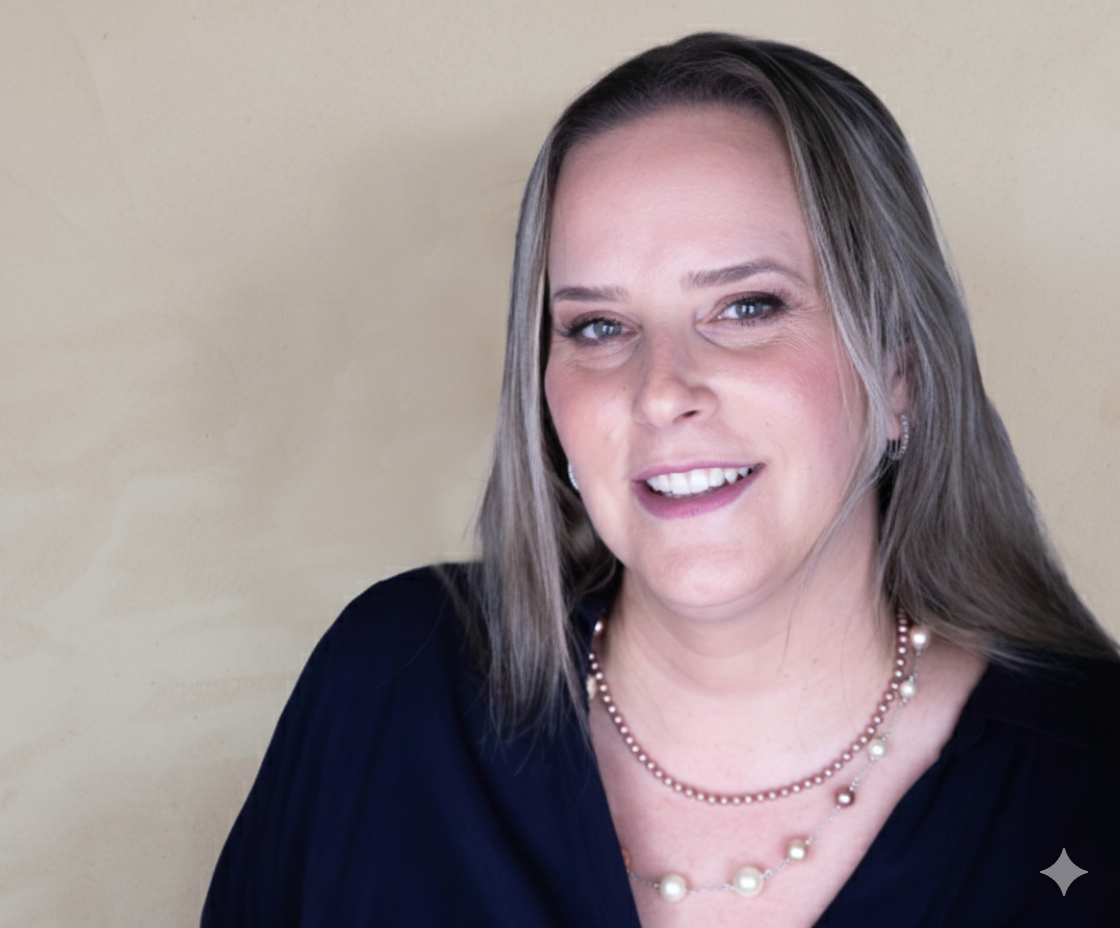
Developed by CAT4 specialist Liron Katz, this page offers free CAT4 Level A-B practice questions, expert explanations, and preparation advice for students aged 8–10. Learn what to expect on the assessment, explore all eight CAT4 question types across the four reasoning batteries, and help your child feel prepared and confident on test day.
CAT4 Levels A and B are the first full versions of the CAT4 assessment, designed for students aged 8–10. Unlike the introductory CAT4 Levels X and Y, these levels include all eight CAT4 question types across the four reasoning batteries: Verbal Reasoning, Quantitative Reasoning, Non-Verbal Reasoning, and Spatial Ability.
By assessing how children reason with words, numbers, patterns, and shapes, CAT4 Levels A and B provide schools with a detailed picture of a student's learning potential, cognitive strengths, and preferred learning style.
This section introduces one sample question from each of the eight CAT4 question types. These examples help students become familiar with the format, develop reasoning skills, and understand the thinking process required to answer CAT4 questions successfully.
It contains two question types: Verbal Analogies and Verbal Classification.
It contains two question types:
Choose the word that belongs in the same group as the first three words.
coconut oil · almond oil · sesame oil
Wrong
Wrong
Wrong
Wrong
Correct!
The correct answer is E
Let's break this down step by step
First, we need to look closely at the given group: coconut oil, almond oil, and sesame oil. We notice that they are all organic products derived from plants, nuts, or seeds, and they are primarily used in kitchens for cooking and baking.
The category isn't just any liquid called "oil." The specific connection is that these are all edible, plant-based culinary oils.
Now, we look for a word in the choices that matches this exact culinary group. "Corn oil" fits perfectly because it is also an edible oil derived from a plant, making it the only logical choice to join the group.
Therefore, answer E is correct.
Answer A is incorrect because motor oil is a synthetic or petroleum-based lubricant used for car engines, not a plant-based oil used for cooking.
Answer B is incorrect because baby oil is a cosmetic mineral oil product used for skin care, which means it does not belong in a group of edible cooking ingredients.
Answer C is incorrect because it is a broad, plural category name rather than a specific example of an oil that matches the pattern of the list.
Answer D is incorrect because it is a massive, overly general category that includes everything we eat, failing to capture the specific "cooking oil" relationship shared by the first three words.
Address Common Mistakes
A common pitfall for students on this type of question is "surface-level matching." A child might see the word "oil" in the prompt and instantly rush to pick Answer A (motor oil) or Answer B (baby oil) simply because they contain the exact word "oil."
To help your child avoid this mistake, encourage them to look beyond the literal words and ask themselves, "What do we do with these items?" Defining the function or purpose of the words will help them find the deeper connection and avoid distractor answers.
The words in the first pair are related in a certain way. Choose the word that completes the second pair so that the words are related in the same way.
bread → bakery : milk →
Wrong
Wrong
Correct!
Wrong
Wrong
The correct answer is C
Let's break this down step by step
First, we look at how the words "bread" and "bakery" connect to one another. A bakery is the specific commercial building or establishment where bread is made and prepared for production.
Next, we can create a simple sentence to define this link, such as "Bread is commercially processed and produced at a bakery." This gives us a clear template to use for our second pair of words.
Now, we insert the word "milk" into our template sentence: "Milk is commercially processed and produced at a..." We need to find the place that matches this description.
Finally, we look through our options to find the facility where milk is collected, processed, and prepared for distribution. A dairy is the specific commercial facility where milk products are processed, which perfectly mirrors the relationship between bread and a bakery.
Therefore, answer C is correct.
Answer A is incorrect because a field is an open area of land where crops grow or animals graze, not the specific production facility where milk is processed.
Answer B is incorrect because a bottle is merely a container used to store or hold milk after it has already been produced.
Answer D is incorrect because cereal is a food item that people often eat alongside milk, meaning it represents a pairing relationship rather than a place of production.
Answer E is incorrect because a cow is the animal that biologically creates the milk, whereas a bakery represents a human-operated commercial location where a product is processed and prepared.
Address Common Mistakes
A very common mistake for children on this question is choosing Answer E (cow). This happens because students intuitively connect "milk" with "cow" faster than any other word on the list. They think about where milk comes from in nature, rather than looking at the specific logic established by the first pair.
To help your child avoid this mistake, remind them that they are not just looking for words that go together. They must follow the exact pattern of the first pair. Since bread does not come from a live animal, milk cannot match with an animal in this specific puzzle.
Skills Tested: Numerical reasoning, number patterns, and mathematical relationships.
Why It Matters: Quantitative reasoning supports mental arithmetic, mathematical problem-solving, and future algebraic thinking.
It contains these questions.
Choose the number that completes the third pair so that it demonstrates the same relationship as the first two pairs.
[20 → 10] [40 → 20] [60 → ?]
Correct!
Wrong
Wrong
Wrong
Wrong
The correct answer is A
Let's break this down step by step.
First, we look at the first given pair, which is [20 → 10]. We need to think about how we can transform 20 into 10 using basic math operations, such as subtracting 10 (20 - 10 = 10) or dividing by 2 (20÷ 2 = 10).
Next, we try out the subtraction rule on our second pair, [40 → 20], to see if it holds true. If we subtract 10 from 40, we get 30, but the second number in this pair is 20, which tells us that simple subtraction is not the correct universal rule for this puzzle.
Then, we try out our division theory on the second pair, [40 → 20], to see if it works instead. If we divide 40 by 2, we get exactly 20, which perfectly matches the second number and confirms that our rule is correct.
Finally, now that we know the consistent rule across the pairs is to divide the first number by 2, we apply this step to the final pair, [60 → ?]. We take 60 and divide it by 2, which gives us 30.
Therefore, answer A is correct.
Answer B is incorrect because 32 does not result from dividing 60 by 2, meaning it violates the established pattern.
Answer C is incorrect because 36 is the result of an entirely different calculation that does not apply to the first two number sets.
Answer D is incorrect because 40 would mean subtracting 20 from 60, which incorrectly uses a subtraction pattern that failed our test in the earlier pairs.
Answer E is incorrect because 50 is the result of subtracting 10 from 60, which mistakenly applies the subtraction rule that only worked for the first pair.
A very frequent mistake for students on this style of question is choosing Answer E (50). This happens because children often look only at the first pair, notice that $20 - 10 = 10$, and assume the rule for the entire question is simply "subtract 10." When they see 60, they quickly subtract 10 to get 50 without checking if that rule actually works for the middle pair.
To help your child avoid this trap, teach them the "Two-Time Rule." They must always test their mathematical rule on both of the first two pairs before they are allowed to apply it to the final pair. If the rule breaks down on the second pair, it means they need to go back and try a different operation.
What number comes next in the series?
57 52 47 42 37 32 27 ?
Wrong
Wrong
Wrong
Correct!
Wrong
The correct answer is D
Let's break this down step by step:
First, we observe the numbers from left to right: 57, 52, 47, 42, 37, 32, and 27. We can easily see that the numbers are decreasing in value, which tells us that the mathematical operation involves subtraction or division.
Next, we determine the precise change between the consecutive numbers by finding the difference between 57 and 52. Subtraction shows us that 57 minus 52 equals 5, which means 5 has been subtracted from the first number.
Then, we check if this same rule applies to the rest of the numbers in the series to confirm our theory. We test the next jumps: 52 minus 5 equals 47, 47 minus 5 equals 42, 42 minus 5 equals 37, 37 minus 5 equals 32, and 32 minus 5 equals 27.
Finally, now that we know the rule is a consistent subtraction of 5, we apply this rule to the very last given number. We take 27 and subtract 5, which gives us 22.
Therefore, answer D is correct.
Why the Other Options Are Incorrect
Answer A is incorrect because 5 is the rule or the number being subtracted at each interval, rather than the actual next value in the progression.
Answer B is incorrect because 17 is the result of subtracting 10 from the last number instead of following the established rule of subtracting 5.
Answer C is incorrect because 25 is only 2 less than 27, which breaks the consistent pattern of subtracting 5 that we found across the rest of the series.
Answer E is incorrect because 32 is a number that already appeared earlier in the sequence, meaning it represents a backward jump rather than continuing the downward progression.
Address Common Mistakes
A frequent mistake students make with decreasing number sequences is miscalculation due to rushing. Because counting backward can be slightly more challenging under timed conditions, a child might accidentally subtract 2 or 5 from the wrong place value, leading them to pick a distractor like 25.
Another common error is confusing the pattern rule itself with the final answer. A student might correctly realize that the pattern is "minus 5" and then instinctively look for the number 5 in the options, choosing Answer A. To help your child avoid this, remind them to always perform the final calculation step on the last number of the sequence instead of stopping once they discover the rule.
Skills Tested: Pattern recognition and logical thinking using shapes and visual information.
Why It Matters: Non-verbal reasoning supports scientific thinking, logical deduction, and visual problem-solving.
It contains
Choose the option that fits together with the three given images.
Wrong
Correct!
Wrong
Wrong
Wrong
The correct answer is B
Let's break this down step by step:
First, we look closely at the first image containing three different shapes: a white pentagon, a red quadrilateral, and a green rounded shape. We notice that the large main shapes have different colors, outlines, and structures, meaning the overarching rule is not about the main shape itself.
Next, we observe the smaller features inside each main shape and see that every single one contains a smaller, solid blue square. This tells us that having a small blue square inside the main figure is a required rule for the group.
Then, we look at where the small blue squares are located inside each figure. In the first shape, it is in the top-left corner; in the second, it is in the bottom-right corner; and in the third, it is in the top-right corner. This reveals that the blue square must always be positioned neatly inside an outer corner or vertex of the main shape.
Finally, we examine the five options in the second image to see which one contains a solid blue square positioned specifically in a corner. The orange shape in option B perfectly fits both rules because it contains a small blue square nestled right in its bottom-left corner.
Therefore, answer B is correct.
Answer A is incorrect because the small square in the corner is white instead of blue, which breaks our first color rule.
Answer C is incorrect because the small shape at the bottom tip is a blue triangle instead of a square, failing our shape rule.
Answer D is incorrect because the blue square is placed flat against a side edge instead of being tucked into a corner.
Answer E is incorrect because the blue square is floating right in the middle of a circle, meaning it lacks any corners to sit in.
Address Common Mistakes
A frequent mistake students make on figure classification tasks is focusing too much on the wrong features, like the color of the big main shapes. A child might look at the green shape in the target group and instinctively pick the green shape in option D because the colors match, completely overlooking the placement of the inner square.
Another common error is noticing the blue square but ignoring its position. A student might glance at option E, see a blue square, and select it without realizing that a circle has no corners. To help your child avoid these traps, teach them to make a checklist of features to check off one by one: shape, color, and position.
The figure on the bottom must change the same way as the figure on top. Choose the figure that reflects the same type of change.
Correct!
Wrong
Wrong
Wrong
Wrong
The correct answer is A.
Let's break this down step by step.
Look at the two shapes in the top row of the grid. On the left, there is a large seven-sided shape (a heptagon). On the right, that shape has changed into a six-sided shape (a hexagon). The key change here is that the shape lost one side. It went from seven sides down to six sides.
The rule in this question is: the shape loses one side as it moves from the left box to the right box. Your child's job is to apply that exact same rule to the bottom row.
The bottom left box contains a four-sided shape, a parallelogram (a slanted quadrilateral with four sides). Following the same rule, this shape must also lose one side. Four minus one equals three. So the missing shape in the bottom right must be a three-sided shape, which means a triangle.
Now look at the five answer choices and ask: which one shows a three-sided shape?
Answer A is a triangle, which has exactly three sides. This fits the rule perfectly.
Answer A is correct because it shows a three-sided shape (a triangle), which is what you get when you apply the rule of removing one side from the four-sided shape in the bottom row.
Answer B is incorrect because it shows a five-sided shape (a pentagon), which actually has more sides than the original four-sided shape, so it goes in the wrong direction entirely.
Answer C is incorrect because it shows a four-sided shape (a trapezoid), which means no change has occurred at all. The number of sides stayed the same rather than decreasing by one.
Answer D is incorrect because it shows a circle, which has no straight sides or corners. A circle does not fit the pattern of counting and reducing sides.
Answer E is incorrect because it shows a triangle, but wait. Looking carefully, Answer E also appears to be a triangle. However, Answer A is the cleaner, more precise match for the transformation shown. If both appear similar, remind your child to look carefully at the shape's orientation and proportions, and to always go back and re-check which option most directly mirrors the rule.
Want more CAT4 Non-Verbal Reasoning practice? Add our Figure Matrices Enrichment Pack to your cart for focused training on one of the most important CAT4 question types.
The pack includes more than 200 Figure Matrices questions across three levels:
Each section is designed to strengthen pattern recognition, visual analysis, and logical reasoning skills through targeted practice and detailed answer explanations.
Add it to your cart today to extend your CAT4 preparation with a comprehensive collection of Figure Matrices questions suitable for a wide range of ability levels.
Skills Tested: Visualisation, mental rotation, and understanding shapes in space.
Why It Matters: Spatial reasoning is closely linked to geometry, engineering, design, and STEM learning.
It contains
Choose the answer choice that shows the final product of the unfolded punched-in paper.
Wrong
Correct!
Wrong
Wrong
Wrong
The correct answer is B.
Let's break this down step by step:
The square piece of paper begins completely open. An arrow shows it being folded in half from the top down to the bottom along a horizontal crease line. This means we are now working with a rectangle that has two layers of paper.
Look closely at the final step of the folding process. Three holes are punched in a straight, horizontal row near the very bottom edge of our folded rectangle.
Because the paper was folded over perfectly in half, every hole punched goes through exactly two layers. When we unfold it, each physical punch will create two holes, giving us a total calculation of 3 holes X 2 = 6 holes
When unfolding the paper upward back to its original square shape, the horizontal crease line acts exactly like a mirror reflection. The three original holes remain at the very bottom edge. Their mirror images will flip over the crease line and appear at the exact opposite end, which is the very top edge of the square.
Answer A is incorrect because it includes an extra row of three holes directly along the center crease line, which would only happen if holes were punched right on the fold line itself.
Answer C is incorrect because the three holes at the top and bottom are spaced out too widely toward the corners, whereas our original punches were tightly clustered in the center.
Answer D is incorrect because it only contains four holes in total, showing two at the top and two at the bottom instead of mirroring all three original punches.
Answer E is incorrect because it contains far too many holes, featuring twelve holes split into four distinct rows, which would require multiple complex folds.
Which of the five designs contains the exact same size outline of the target, including each side in full.
Wrong
Wrong
Wrong
Wrong
Correct!
The correct answer is E
Let's break this down step by step.
Look at the target shape shown on its own. It is a cross-like figure with a rectangular body and two small rectangular notches cut into the sides, one on the left and one on the right, giving it a slightly unusual outline. It is not a perfect cross and not a plain rectangle. The key feature is that the overall outline has those small indentations on the sides. Every edge and corner of this outline matters.
The task is to find which of the five answer options contains that exact same outline, the same shape, the same size, and with every side visible and unbroken. The target shape may be hidden inside a busier design, so your child needs to mentally trace just the outer edge and ask: is the full outline of my target shape here, and is nothing blocking or cutting off any part of it?
Go through each option methodically rather than guessing. In each answer image, a red outline has been placed over the design to show where the target shape sits. Your child's job is to check whether that red outline matches the target shape exactly, with all sides fully visible and no lines from the background design cutting across or hiding part of the target outline.
In answer E, the target shape sits over two plain rectangles placed side by side. When you trace the outline of the target shape over this design, every single edge of the outline is visible and clear. The background design does not interrupt any part of the outline, and the size and proportions match the target exactly. This makes E the correct answer.
Answer A is incorrect because the background design contains multiple overlapping rectangles and internal grid lines that cut across the outline of the target shape, making it impossible to see the full outline clearly and without interruption.
Answer B is incorrect because while the shape is positioned over rectangles, the internal vertical and horizontal lines of the background design break through the outline of the target shape, so the full boundary of the target cannot be traced without interruption.
Answer C is incorrect because the background design is a large cross shape, which has a similar but not identical outline to the target. The proportions and the specific indentations do not match the target shape exactly, so it is not a true match.
Answer D is incorrect because the background design includes a large diamond shape and triangular sections around it. The outline of the target shape does not sit cleanly over this design, and the angles and lines of the background interfere with the outline.
Every CAT4 question type has its own logic, and knowing what to look for before the test makes a real difference. These tips give you and your child a practical edge on each of the eight question types in the CAT4 Level A-B assessment.
Look for the rule that connects all three words, not just two of them. A convincing distractor will often share something with one or two of the group words. The correct answer must fit the same specific category as all three.
Before looking at the answer choices, say the relationship out loud: "Bread comes from a bakery, so milk comes from a ___." Building the sentence yourself first stops you being pulled toward attractive-sounding distractors that fit loosely rather than precisely.
Always test your rule on both pairs before committing to an answer. A rule that works for the first pair but fails on the second is the wrong rule. Only apply it to the third pair once you have confirmed it holds consistently.
Note the differences between consecutive numbers as you go. On a screen-based test it is tempting to work it out in your head, but tracking the steps in sequence makes it much easier to spot a changing pattern or a two-step rule.
Look for two rules, not one. CAT4 Figure Classification questions almost always require you to identify both a shape rule and a position or orientation rule. An answer choice that satisfies only one of the two rules is a deliberate trap.
You are not looking for a shape that looks similar. You are looking for the exact outline, complete and uncut, hidden within a busier design. Train your eye to trace the full perimeter of the target shape and then search for that continuous line within each answer option. Partial matches are wrong answers.
Cover the answer options first and describe the transformation in your own words: "The shape rotates 90 degrees and loses its shading." Then look at the choices. Going to the options too early pulls children toward answers that look similar rather than answers that follow the correct rule.
Work through the folds one at a time, in order. Then mirror each hole back through every fold before marking its final position. Children who try to hold the whole sequence in their head at once often miscount holes. Slow, step-by-step unfolding is faster in the end.
CAT4 Levels A and B are typically delivered through GL Assessment's digital Testwise platform.
Students complete:
The CAT4 report includes three important measures that help schools and parents understand a child's reasoning ability. The components of the CAT4 scores are:
Standard Age Score (SAS)
The Standard Age Score is the most important CAT4 measure. It adjusts results according to a child's exact age so that younger and older students within the same school year can be compared fairly.
The national average SAS is 100.
National Percentile Rank (NPR)
The National Percentile Rank shows how a student performed compared with other children of the same age.
For example, an NPR of 75 means the student performed better than 75% of similar-aged students nationally.
Stanines
Stanines group students into nine broad bands:
1-3 = Below average
4-6 = Average
7-9 = Above average
Together, these scores help schools identify strengths, support learning plans, and monitor progress over time.
Here is why a combined approach gives your child a distinct marketing and academic advantage:
The goal of CAT4 preparation is familiarity and confidence rather than intensive study.
Parents can help by:
Familiarity with CAT4 question types often helps children feel calmer and more confident on test day.
Familiarity is everything on the CAT4. Children who encounter the question formats for the first time on test day often lose valuable time just figuring out what they're being asked to do. The CAT4 Level A-B PrepPack gives your child guided exposure to all eight question types before that happens, so they walk in recognising the format immediately and can focus entirely on reasoning.
The samples on this page are introductory examples. The actual CAT4 Level A-B assessment, and particularly Level B, includes significantly more complex versions of each question type with tighter timing and less obvious patterns. The PrepPack builds your child's skills progressively, moving from accessible entry-level questions through to the more demanding reasoning challenges they will face on the real test.
The free samples give you one example per question type, which is a useful starting point but not enough to build real skill or confidence. The PrepPack includes hundreds of practice questions across all eight subtests, full answer explanations for every question, timed practice conditions that mirror the actual Testwise digital platform, and a structured progression from easier to harder material.
Yes, and this is exactly the situation the PrepPack is designed for. Because the CAT4 assesses four separate batteries, a weakness in one area can bring down the overall profile even when a child performs well elsewhere. Schools use the full battery picture to make decisions. The PrepPack covers all eight question types so you can target the areas where your child needs the most support while still consolidating their strengths.
You do not need to clear the calendar. Short, consistent sessions of 10 to 15 minutes are more effective for this age group than long study sessions. The PrepPack supports exactly this kind of preparation with focused practice by question type, so you can slot it easily into a school-week routine. Most families find that a few weeks of regular light practice makes a meaningful difference to their child's confidence and performance on test day.
A language and linguistics expert with an MA in Language Teaching and over a decade of experience developing assessment-aligned practice across multiple subjects that mirrors the rigor of real edtech tests. Liron creates prep packs with clear, structured exercises that enhance learning, adapt to digital tools, and empower every student to perform their best on a wide range of assessments
Money back guarantee
Since 1992, TestPrep-Online has helped individuals prepare for all kinds of tests. From entrance exams into gifted programs, to assessment tests, and graduate assessment and placement tests, TestPrep-Online can help you prepare and pass.