Homeschool Testing Online: A Clear and Supportive Guide for Parents
Homeschooling offers families flexibility and independence, but it also comes with important responsibilities. One of the most common concerns parents raise is how to handle testing and evaluations, especially when state requirements feel unclear or seem to change from year to year.
Having worked with thousands of families preparing for homeschool assessments, I hear the same question again and again:
“What do I need to submit, and how do I know my child is ready?”
The reassuring news is that homeschool testing does not need to feel overwhelming. With clear information and thoughtful preparation, standardized testing can become a helpful tool rather than a hurdle.

Do Homeschoolers Need to Take Standardized Tests?
There is no single yes-or-no answer. Homeschool testing requirements depend on where you live. In the United States, homeschooling laws are set at the state level, than by the federal government.
- Some states require annual standardized testing.
- Some allow parents to choose between testing or a portfolio evaluation.
- Some states do not require formal testing at all.
Even in states where testing is optional, many families choose to use standardized assessments. These tests offer a clear, widely recognized way to document academic progress and often make annual reporting more straightforward and organized.

State-by-State Homeschool Testing Requirements (Expandable Guide)
Because homeschool regulations can change, as a teacher I always encourage parents to check their state’s current requirements before planning assessments. That said, in states where testing or evaluations are required, most accept nationally recognized standardized achievement tests.
Many families choose standardized, norm-referenced tests because they are widely accepted by evaluators and school districts and clearly show how a child’s performance compares to national benchmarks in an annual homeschool report.
Below is an overview of homeschool testing and evaluation requirements across the United States. The information is based on publicly available guidance from HSLDA.org, but families should always verify current regulations with their state or local education authority, as laws and reporting expectations may change.
For clarity, states are grouped into three general categories: High, Moderate, and Low regulation. Use the tabs below to explore each category and view the corresponding tables.
Examples include New York, Pennsylvania, Massachusetts.
-
Annual assessment required
-
Standardized norm-referenced test or certified teacher evaluation
|
State |
Notice Required |
Testing Mandated |
Evaluation Required |
Notes / Sources |
|
New York |
Yes |
Yes |
Yes |
Annual notice, individualized homeschool plan, quarterly reports, and annual standardized testing or approved evaluation required. |
|
North Carolina |
Yes |
Yes |
Yes |
Notice required; annual nationally standardized testing required; records maintained. |
|
North Dakota |
Yes |
Yes |
Yes |
Notice required; testing at grades 4, 6, 8, and 10; evaluation reports required. |
|
Pennsylvania |
Yes |
Yes |
Yes |
Notice plus standardized testing in certain grades; annual evaluation of progress required. |
|
Vermont |
Yes |
Yes |
Yes |
Notice required; annual standardized test or portfolio review; progress reports must be maintained. |
|
Washington |
Yes |
Yes |
Yes |
Annual declaration of intent; standardized test or equivalent required; academic progress reports expected. |
|
West Virginia |
Yes |
Yes |
Yes |
Notice required; submission of standardized test or other assessment required. |
|
Louisiana |
Yes |
Yes |
Yes |
Certain homeschool options require testing or portfolio review; notice required. |
|
Maine |
Yes |
Yes |
Yes |
Annual notice and academic assessment required; evaluation can include testing or teacher review. |
|
Minnesota |
Yes |
Yes |
Yes |
Annual notice; nationally norm-referenced test or equivalent required; academic progress must be documented. |
|
Colorado |
Yes |
Yes (grades 3–11, every other year) |
Yes |
Notice required to district; standardized testing or alternative evaluation must be submitted. |
|
Georgia |
Yes |
Yes (every 3 years starting grade 3) |
Yes |
Declaration of intent, 180 days of instruction, testing every 3 years. |
|
Hawaii |
Yes |
Yes (certain grades) |
Yes |
Parents submit notice; testing or portfolio evaluation required. |
|
Oregon |
Yes |
Yes (certain grades) |
Yes |
Notice required; standardized testing at specific grades or approved evaluation. |
|
Tennessee |
Yes |
Yes (certain grades) |
Yes |
Notice required; standardized testing in grades 5, 7, 9 for certain programs; evaluation required. |
|
Virginia |
Yes |
Yes/Varies |
Yes |
Notice of intent and end-of-year evidence of progress required (test scores or portfolio). |
|
Rhode Island |
Yes |
No (district decides) |
Yes |
Local school committee approval of plan required; evaluation of progress through testing, portfolio, or teacher review. |
|
South Carolina |
Yes |
Yes/Varies |
Yes |
Notice required; testing or portfolio review depending on homeschool option. |
Examples include Florida, Ohio, Washington.
-
Assessment required at certain grade levels or intervals
-
Testing or portfolio evaluation usually accepted
|
State |
Notice Required |
Testing Mandated |
Evaluation Required |
Notes / Sources |
|
Delaware |
Yes |
No |
Yes |
Notice of intent required; parents must maintain academic records and provide annual evaluation (portfolio or teacher review). |
|
District of Columbia |
Yes |
No |
Yes |
Written notification required; progress evaluation expected under OSSE oversight. |
|
Florida |
Yes |
No |
Yes |
Notice of intent and annual evaluation required under statutory option; standardized tests optional. |
|
Kansas |
Yes |
No |
Yes |
Notice of intent required in the 1st year; parents must keep progress records and submit evaluations. |
|
Kentucky |
Yes |
No |
Yes |
Parents submit notice; academic progress must be documented. |
|
Maryland |
Yes |
No |
Yes |
Notice required; parents must maintain progress records or submit evaluations. |
|
Massachusetts |
Yes |
As required |
Yes |
Local districts must approve the homeschool plan; evidence of academic progress (portfolio, tests, or teacher review) is typically required. |
|
New Hampshire |
Yes |
No |
Yes |
Notice to participating agency; portfolio or annual evaluation of progress required. |
|
New Mexico |
Yes |
No |
Yes |
Parents submit notice; academic progress must be documented. |
|
Ohio |
Yes |
No |
Yes |
Notification and yearly assessment (test or portfolio) required. |
|
Wisconsin |
Yes |
No |
Yes |
Notice required; academic progress must be documented (portfolio, teacher review, or similar). |
|
Alabama |
Yes |
No |
No |
Homeschooling is largely unregulated; no formal notification or testing required. |
|
Arizona |
Yes |
No |
No |
Parents must submit a notice of intent; testing is not mandated. |
|
Arkansas |
Yes |
No |
No |
Affidavit/notice required; testing and evaluation optional. |
|
California |
Yes |
No |
No |
Homeschool operates under private school affidavit; testing not required. |
|
Iowa |
Yes |
No |
No |
File form A-You may opt to assess |
|
Mississippi |
Yes |
No |
No |
Affidavit only; no testing or reporting required. |
|
Montana |
Yes |
No |
No |
Notice required; progress records must be maintained, evaluation optional. |
|
Nebraska |
Yes |
No |
No |
Notice of intent and recordkeeping required; evaluation may be requested by school. |
|
Nevada |
Yes |
No |
No |
Notice required; no testing or evaluation mandated. |
|
South Dakota |
Yes |
No |
No |
Notice required; no mandated testing or reporting. |
|
Utah |
Yes |
No |
No |
Affidavit required; testing and evaluation optional. |
Examples include Texas, Idaho, Oklahoma.
-
No testing required by law
-
Many families test voluntarily for documentation
|
State |
Notice Required |
Testing Mandated |
Evaluation Required |
Notes / Sources |
|
Alaska |
No |
No |
No |
No notice, testing, or reporting requirements unless within the frame of a religious school. |
|
Idaho |
No |
No |
No |
No notice or evaluation required. |
|
Illinois |
No |
No |
No |
Homeschooling not regulated. |
|
Indiana |
No |
No |
No |
Minimal oversight; no notice or testing required. |
|
Missouri |
No |
No |
No |
Homeschooling unregulated. |
|
New Jersey |
No |
No |
No |
No legal requirement for notice, testing, or reporting. |
|
Oklahoma |
No |
No |
No |
Homeschooling largely unregulated. |
|
Texas |
No |
No |
No |
Minimal oversight; no notice or testing. |
|
Wyoming |
No |
No |
No |
Homeschooling largely unregulated. |
|
Michigan |
No |
No |
No |
No notification, testing, or evaluation mandated unless it’s a non-public school. |

How Online Homeschool Testing Works
Preparation is not about pushing children beyond their limits. It is about helping them feel calm, confident, and familiar with what they will encounter on test day. When expectations are clear and the process is understood, testing becomes far less intimidating for both students and parents.
To support families at this stage, we’ve created a free homeschool testing checklist that walks through each step clearly and simply.
Most online homeschool testing follows a straightforward process:
-
Confirm your state or evaluator’s testing requirements
-
Choose an accepted standardized assessment
-
Practice with test-style questions
-
Complete the online test through an approved provider
-
Submit results as part of your homeschool evaluation or annual report
Preparation focuses on familiarity, confidence, and reduced test anxiety. In most states, there is no minimum passing score. The test is used to show academic progress, not to determine promotion or failure.

Online Standardized Tests Commonly Used for Homeschool Evaluations
Choosing the right online assessment can feel like a big decision. Many homeschool families, however, find that digital testing reduces pressure by offering a familiar format, flexible scheduling, and clear, organized results.
When permitted by state regulations or evaluators, the following standardized assessments are commonly used for homeschool evaluations.
- Read the boxes below to find out more about each test's features, requirements, and typical use cases.
- Click on the box to find a one-stop shop for mastering the assessment:


Some states allow formal evaluations instead of standardized testing. These may include certified teacher portfolio reviews, written evaluations, or alternative assessments. Always confirm what your state or evaluator accepts.
In some states and for older students, college entrance exams such as the SAT may be accepted as academic documentation or used to demonstrate college readiness.
There is no single nationwide list of “approved” tests. Most states require a norm-referenced achievement test or another assessment approved by the state or evaluator. Commonly accepted options may include tests such as the Iowa Assessments, Stanford Achievement Test (Stanford 10), TerraNova or CAT, MAP Growth, Renaissance Star, i-Ready, FastBridge, PASS, CLT, CTBS, or CTP when permitted by local regulations. Always check your state’s homeschool law or ask your evaluator which tests they accept.
Many homeschool-approved tests do not require a third-party proctor and can be parent-administered, depending on the test and state rules. Many modern homeschool tests are also offered online and provide fast or instant results.
Most homeschool standardized tests assess reading comprehension, language arts, and math. Some also include science or social studies

Why Many Homeschool Families Prepare for Testing
Even when testing is “optional,” unprepared testing can backfire.
From years of working with homeschool families, we see parents use test prep to:
- Submit compliant evaluations with confidence
- Avoid remediation letters or follow-up reviews
- Prepare students who’ve never taken a formal test
- Create clean records for re-entry, scholarships, or college planning
Testing isn’t just paperwork: it’s protection.
Homeschool families also choose to test voluntarily to document academic progress, identify strengths and learning gaps, support annual homeschool reports, and prepare students for future academic studies.
On average, homeschool students perform well on standardized tests and often score higher than public school peers.

How TestPrep-Online Supports Homeschool Testing
Our test preparation practice packs are built specifically for state-recognized, norm-referenced exams, including:
- Realistic question types
- Grade-level coverage aligned with major homeschool tests
- Step-by-step explanations parents can use for instruction
- Practice that reduces test anxiety, especially for first-time testers
You don’t need to “teach to the test.”
You just need your child to understand the format, timing, and expectations.
Prepare Once. Test Confidently. Submit with Peace of Mind.
If your state requires testing, or you simply want solid documentation, proper preparation makes the difference between stress and confidence.
Looking to prepare the whole family? Our Family Membership Plan provides instant access to these simulations and practice materials for up to three children at once.

Frequently Asked Questions About Homeschool Testing
It depends on your state. Some states require annual standardized testing, while others allow evaluations, portfolios, or no testing at all.
About half of U.S. states require some form of assessment. These may include standardized tests, certified teacher evaluations, or portfolio reviews.
When required, testing is usually done once per year. Some states only require testing at certain grade levels.
Many states require or accept nationally norm-referenced standardized achievement tests.
A norm-referenced test compares your child's performance to students across the country at the same grade level. It shows how your child is progressing relative to national averages.
There is no single nationwide list of “approved” tests. Most states require a norm-referenced achievement test or another assessment approved by the state or evaluator. Commonly accepted options may include tests such as the Iowa Test of Basic Skills, Stanford or California Achievement Tests, CTBS or CTP, PASS, CLT, and school-based assessments like MAP Growth, Renaissance Star, i-Ready, or FastBridge—when permitted by local regulations. Always check your state’s homeschool law or ask your evaluator which tests they accept.
Many homeschool-approved tests do not require a third-party proctor and can be parent-administered, depending on the test and state rules.
Yes. Many modern homeschool tests are offered online and provide fast or instant results.
Most tests assess:
- Reading comprehension
- Language arts
- Math
Some may also include science or social studies.
Preparation should focus on:
Familiarity with multiple-choice questions
Practicing reading and math skills
Reducing anxiety through realistic practice
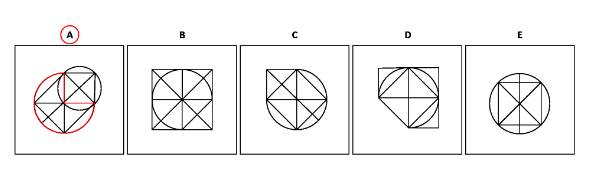
Figure Recognition Question
The shape you need to identify is shown at the top of the image. Your task is to find the answer choice (A, B, C, D, or E) that contains the exact same shape, maintaining its size and orientation.
The correct answer is A.
Let's Break This Down Step by Step
First, let's take a close look at the shape we need to find. At the top of the image, we see a pie chart shape that looks like a circle with about one quarter (1/4) of it missing, creating what looks like a "Pac-Man" mouth opening to the right. This is our target shape, and we need to find the answer choice that contains this exact same shape with the same size and orientation.

This is a Figure Recognition question, which means we need to locate the target shape hidden somewhere within the answer choices. The key word here is "exact" - the shape must maintain its size and orientation perfectly. It can't be rotated, flipped, resized, or changed in any way. Think of it like finding a specific puzzle piece that fits perfectly without any modifications.
Answer Choice A
Looking at answer choice A, we can see a circular shape with internal line divisions creating a pattern. Most importantly, when we look carefully at this figure, we can identify our target pie chart shape within it! The shape appears in the correct size and orientation, with the "mouth" opening to the right, just like our target shape. The circular outline and the quarter segment missing match perfectly.
Answer Choice B
Answer choice B shows a square shape divided into triangular sections by diagonal and perpendicular lines. Since our target shape is circular (a pie chart), and this answer choice is based on a square, we can confidently eliminate B. The fundamental shape is different, so our circular pie chart cannot be found here.
Answer Choice C
Answer choice C contains a circular shape, which is promising! However, when we look more carefully, the internal structure and orientation don't match our target. While it has a circular base, the way the segments are arranged and the direction of any "mouth" or opening doesn't align with our target shape's orientation. Close, but not quite right!
Answer Choice D
Answer choice D shows a shape that's more rectangular or square-based with diagonal lines and what appears to be a triangular cutout or segment. Our target shape has a circular base with a rounded "mouth" opening, not a triangular one. The overall geometry is different, so we can eliminate D as well.
Answer Choice E
Answer choice E displays a full circle with internal divisions creating a symmetrical pattern. While it is circular like our target shape, it's missing the key feature we need - that quarter segment cutout that creates the "mouth" opening. It's a complete circle, whereas our target is missing approximately one quarter of the circle. This doesn't match, so E is not correct.
Confirm the Correct Answer
Going back to answer choice A, we can now confidently confirm that it's the right answer! It's the only choice that contains our exact target shape - a circular pie chart with about three quarters of the circle present and one quarter missing, creating that distinctive "mouth" opening to the right. The size matches, the orientation matches, and all the details line up perfectly. Answer A contains our shape exactly as required, making it the correct answer!